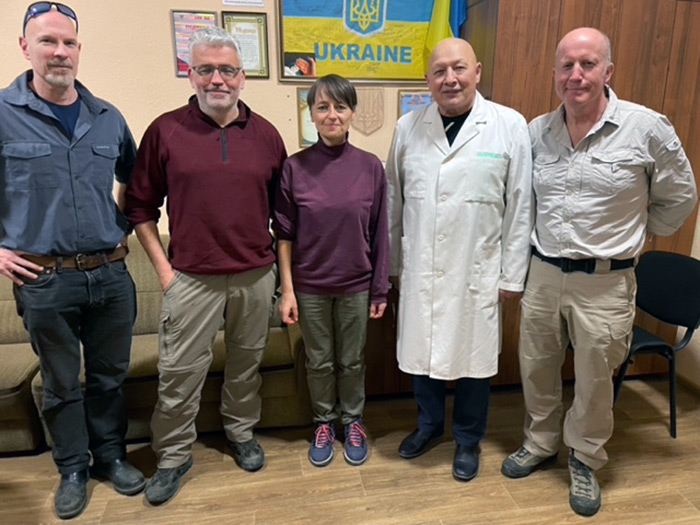
Latest report from the frontline of the war in Ukraine following the Russian invasion from Inverness trauma surgeon Andy Kent from today’s Highland News.
THE possibility of a chemical weapons attack remains a very real fear for medics in Ukraine, according to an Inverness surgeon.
Andy Kent, a consultant trauma and orthopaedic surgeon normally based at Raigmore Hospital, is currently acting as surgical lead with charity UK-Med in the war-torn country.
After visiting a range of hospitals he said: “Although they seem to be coping well in terms of capacity and personnel at present, there is no doubting that any sudden surge in Russian aggression could rapidly overwhelm their resources.”
And he added: “The threat of receiving chemical warfare casualties is of particular concern to them.
“We’ve been travelling clockwise around the rear echelons of defensive positions visiting civilian hospitals in towns and cities – Vinnitsyia, Zhytomyr, Bila Tservka, Kremenchuk, Poltava and Dnipro – offering help in providing specialist medical training and capacity building.”
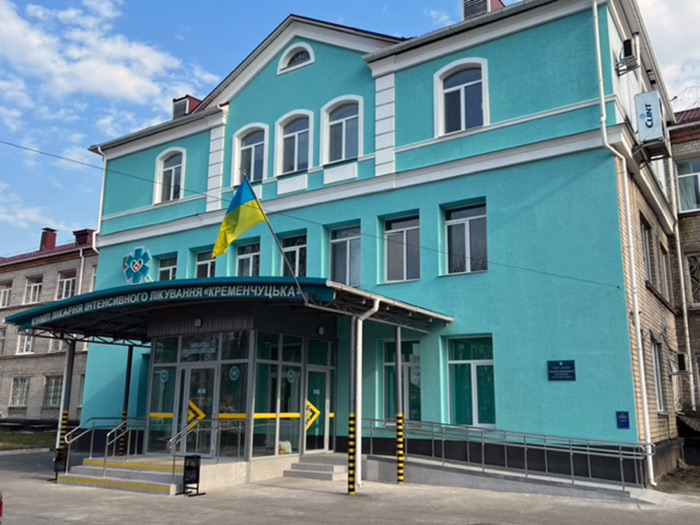
The team has seen very few conflict-related casualties as a result of the fact that most of these are being absorbed into the separate military medical system while most civilian casualties remain in frontline hospitals within besieged towns and cities UK-Med has not accessed.
However, Mr Kent said there was a “constant wave” of internally displaced people (IDP), totalling up to 10 million, currently moving from eastern regions of Ukraine to the west.
Many families, though, he said, are electing to stay in temporary accommodation in or around the towns and cities of central Ukraine “praying that the war will end soon and they can return home to rebuild their lives”.

He added: “This is particularly true of the elderly – many of whom are too frail, or proudly defiant, to travel and have been left behind by their younger generations.
“This influx of people is overwhelming the primary healthcare system and UK-Med, along with many other local and international volunteers, is establishing both static and mobile clinics to help address these needs.”
Mr Kent has helped set up a clinic in Drohobych, south of Lviv, which is now functioning and staffed by several NHS volunteers.
“As a trauma surgeon with considerable experience of conflict-related trauma, it can be a struggle to balance enthusiasm to get closer to the point of injury with the obvious risks to myself and my team,” he said.
“UK-Med is a humanitarian charity which relies on civilian (mainly NHS) healthcare volunteers – many of whom have no conflict experience – and we have to be extremely careful about where we place them.
“Currently, we are planning to establish a surgical base at a civilian trauma hospital in Vinnytsia, which is relatively safe and with good communication to the west if required.
“From this base, we intend to deliver expert training in limb reconstruction surgery and rehabilitation – building on the experience and capacity of local staff.
“We can also undertake outreach clinics and training – in mass casualty, chemical and combat trauma management – to the wider medical community.
“Personally, I plan to return to Inverness in the next week or so. Having spent four weeks in Ukraine and the previous three weeks in Yemen, I feel I owe it to my wife, my NHS colleagues at Raigmore and myself.”
He said he felt the war would not end quickly and he would return.
From the Highland News on Thursday, March 31, 2022.
Related article:
 Ian Duncan Media
One thought on “Chemical war threat fear ”