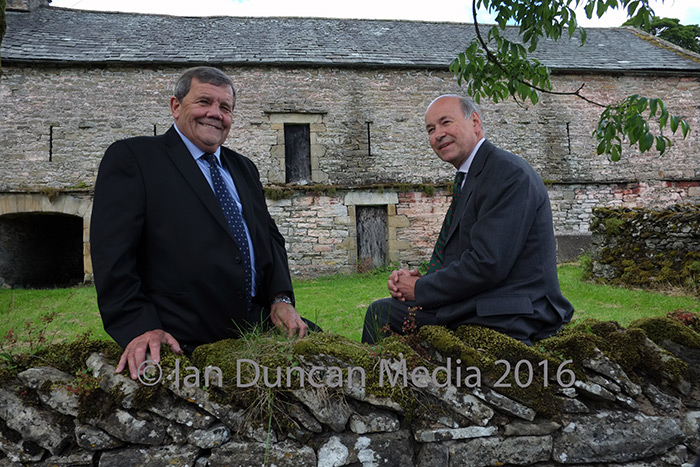
MONDAY — which has the official title Yorkshire Day — seemed an appropriate time to officially mark the extension of two national parks in Cumbria.
The total area of the Yorkshire Dales national park was extended by 161 square miles, an increase of 24 per cent., and the Lake District park now has an additional 27 square miles.
And, around the Tebay area, the national parks are now closer than ever before — separated only by the M6 corridor.
It is hoped that extending the boundaries for the first time will provide a boost to rural tourism and see the landscape protected for generations to come.
Following the expansion, the Yorkshire Dales park now includes parts of the Orton Fells, the northern Howgill Fells, Wild Boar Fell and Mallerstang.
And the Lake District park has now been extended to include Birkbeck Fells Common to Whinfell Common, as well as Helsington Barrows to Sizergh Fell and part of the Lyth Valley.
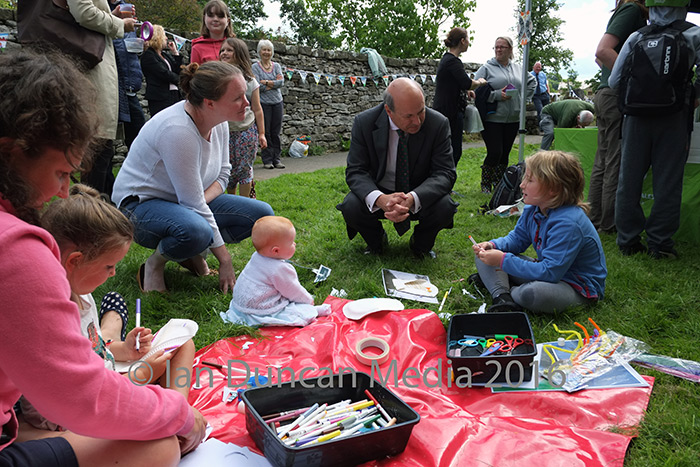
The expansion of both parks was announced by the Department for Environment, Food and Rural Affairs (Defra) in October and Defra minister, Lord Gardiner of Kimble, attended a special launch event in Orton on Monday.
He said he was “delighted” to be there, on what was his first ministerial engagement, and added: “We need to ensure that those within the national parks see the benefit of this.”
Environment Secretary and former Conservative Party leadership hopeful Andrea Leadsom was also due to attend the event, but her planned trip to Cumbria was cancelled late last week.
But in a statement she said: “The Dales and Lake District are part of our nation’s proud identity — immortalised by W H Auden and Wordsworth — they are home to some of our country’s most beautiful and rugged landscapes.
“Today’s extension will virtually join up these precious natural assets, supporting the local economy, creating jobs and securing the area’s reputation as one of our country’s most attractive tourist destinations for generations to come.”

The two national parks were originally created in the 1950s and Natural England first proposed the expansion in 2009 — a public inquiry was launched in 2013, which attracted 3000 objections and representations, which recommended that the move should be approved.
David Vose, Natural England’s project manager for the boundary changes, said it had been a “long time coming” and the two parks were “very special places”.
He said he enjoyed cycling in the area and added: “You just go around and you just see how beautiful these places are. The landscape is beautiful.”
Mr Vose said people would be reassured the areas now covered by the parks would get national recognition and the move represented “economic value” for local communities.

Carl Lis, chairman of the Yorkshire Dales National Park Authority, said: “I’m eternally grateful for the extraordinary workso many people have put in to make today a reality.
“The Government decision to extend the boundary is an illustration of how important national parks are to the people and to the fabric of this country.”
He added that the national park authority would be working alongside local people and businesses to ensure it remained a thriving area.
“Its unique cultural landscape will be treasured for its stunning scenery, exceptional heritage and wonderful wildlife, and every year millions of people will be inspired tobe a part of it,” he said.
Richard Leafe, chief executive of the Lake District National Park Authority, said Monday was a “historic day” for the Lake District national park and one that deserved celebration.
He added: “This extension represents unfinished business for the park and the new boundary line will be more fitting, following the natural landscape.
“This extension was largely supported by the communities, showing that there continues to be a high level of support and recognition for the good work that is done in national parks.
“We’re looking forward to maintaining and improving the environment in these new areas, particularly the rights of ways, creating even more of the Lake District for people to enjoy.”
Kate Ashbrook, general secretary of the Open Spaces Society, also welcomed what she described as the completion of “long-unfinished business” and added: “The park borders were illogical, reflecting former local authority boundaries which paid no attention to landscape and natural beauty.”
She said the new national park areas were rich in common land and other open country where people had the right to roam free. She added: “It is entirely fitting that the new designations should take effect in the 80th anniversary year of the Campaign for National Parks, at the end of National Parks Week — and on Yorkshire Day.”
From the Cumberland & Westmorland Herald on Saturday, August 6, 2016.
 Ian Duncan Media