
It was my first week in Scarborough and I quite enjoyed retelling this story which, as I recall, involved just going through contemporary reports and outlining what had happened.
It was a couple of years after the Bombardment of Scarborough, Whitby and Hartlepool in December 1914 and it turned out the humane U-boat commander was connected to that incident.
It was also a coincidence that the rescued crews were taken to my hometown of South Shields before returning home.
We published an appeal for surviving relatives of the 126 fishermen who were to contact us and that proved successful and provided a good follow up article.
‘Humane’ U-boat commander braved enemy waters to save 126 lives
SEPTEMBER 2006 marked the 90th anniversary of the sinking of the Scarborough fishing fleet by a German submarine during the First World War. It was carried out by SM U-57 which was commanded by a highly decorated naval officer who also took part in the bombardment of the East Coast two years earlier. Reporter IAN DUNCAN looks back at events of that fateful night when the town’s fishing fleet was reduced to only four vessels.

AS DARKNESS fell on the evening of September 24, 1916, 12 Scarborough trawlers were fishing on Whitby Fine Ground, 20 miles north east of the town.
They were not to know it, but there was a grim night ahead of them which – but for the extraordinarily humanitarian actions of a German U-boat commander – could so easily have ended in the loss of all of their 126 lives.
All of the boats, except Ben Hope (SH240), were in close formation and had oil lamps attached to their masts to signal to other vessels they had their nets down. At the time there were no blackout restrictions, which were introduced the following year with the introduction of the convoy system.
The trawlers were Fisher Prince (SH207), Gamecock (SH191), Harrier (SH30), Marguerite (SH214), Nil Desperandum (SH186), Otter (SH70), Otter Hound (H92), Quebec (SH208), Seal (SH126), Sunshine (SH241) and Tarantula (SH184).
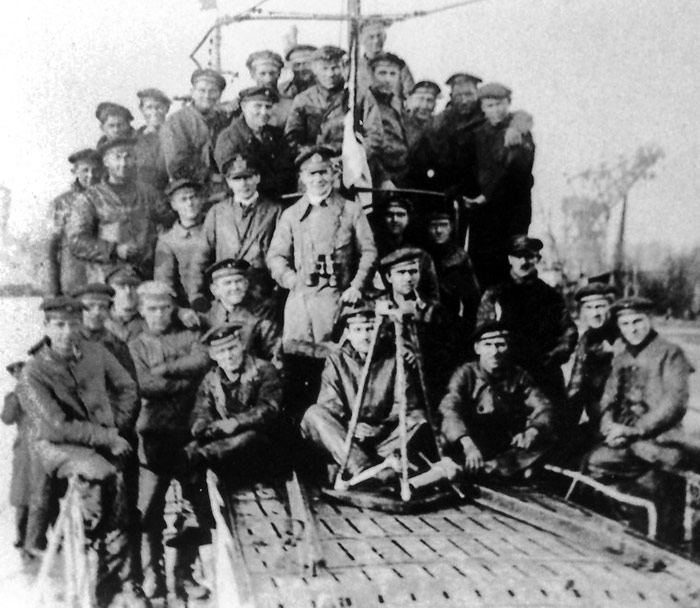
Suddenly, a U-boat surfaced beside the Fisher Prince and its crew quickly swung grappling hooks over the trawler’s side. The German commander led a party of armed raiders aboard the stricken vessel.
Speaking in English the commander of SM U57 ordered skipper Dave Naylor to “stop the engines and hand over the Ship’s Register”.
Then the skipper and his crew of eight were marshalled into the trawler’s fish-hold. Kapitänleutnant Ritter von Georg then left a “prize crew” aboard the trawler before returning to his U-boat and, without submerging, sped silently to pull up alongside the Otter Hound.
The raiding party carried out a similar operation to seize the vessel from skipper Jim Blackman. Five minutes later the crew was ordered aboard the U-boat and ferried to the Fisher Prince.
The German sailors confiscated all the trawler’s food supplies – except the beef – and then continued to capture the other trawlers fishing nearby.
There were nine Scarborough trawlers and two with Scarborough crews – Saint Hilda of Whitby, skippered by Billy Hall, and Loch Ness of Hartlepool, skippered by Dick Wright – and a Hull trawler named Trinidad.
All the Ship’s Registers were taken by the U-boat commander as proof he had captured and sunk them.
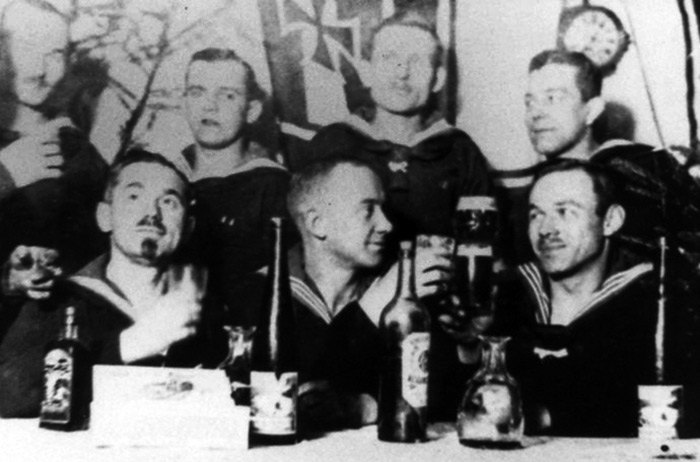
The captured fishermen were all taken to the Fisher Prince and bundled into the fish-hold. The 126 men were guarded by four sailors who were armed, but not unfriendly.
Their comrades then proceeded to methodically scupper 13 captured trawlers; 12 were sunk by gunfire and the Nil Desperandum was destroyed by a time bomb.
British Admiralty records show that seven trawlers were captured on the evening of September 24 and seven in the early hours of the following day.
One Scarborough trawler, the Ben Hope, managed to evade capture because it was fishing away from the main fleet. She was owned by Dick Crawford and skippered by Walter “Wanny” Crawford.
After hearing the sound of gunfire during the early hours of September 25, the skipper ordered his crew to haul in the nets and, with the catch safely aboard, steamed home at full speed.
Just after dawn the U-boat stopped a northbound Norwegian cargo ship.
The German commander arranged for the Norwegian Captain to take the captured fishermen to a British port.
Dave Naylor and his crew were ordered to start up the engines of the Fisher Prince and sail alongside the Norwegian ship and climb aboard.
Kapitänleutnant von Georg bid his captives “auf wiedersehen”. Once they were all safely aboard, the U-boat sank the final trawler with gunfire.
The fishermen were landed at South Shields and cared for at the Missions to Seamen’s Institute, returning home by rail on the following day.
They all knew the German commander could have sunk the trawlers with their crews still aboard in a fraction of the time the operation took.
Only a humanitarian would have kept his U-boat in enemy waters for 10 hours in order to save 126 lives.
Kapitänleutnant von Georg was born on August 27, 1886, in Oberndorf, and when he was 18 he went to sea.
After the outbreak of the First World War he took part in several sea battles – including the bombardment of the English East Coast in 1914.
He was later awarded the Order for Merit – the Blue Max – the greatest German war decoration for honour. It was created by Frederick the Great of Prussia in 1740 and was awarded to officers for great military performance and valour. Only 27 U-boat commanders received the award.
The loss of 11 vessels reduced the town’s fishing fleet to just three trawlers – Penguin (SH223), Ben Hope (SH24) and Scorpion (SH182) – and one drifter, Gamester (SH204).
The attack threw the 126 captured fishermen out of work and there was also a loss of income for the owners of the sunken vessels.
Local businesses, including ice companies, coal merchants, butchers and grocers also were affected.
Many of the fishermen had to go as far afield as Aberdeen and Hartlepool to find work.
In 1917 Scarborough Harbour was closed as a fishing port because of the danger from mines and U-boats in its coastal waters.
The Admiralty then ordered the town’s fishing fleet to be based in Aberdeen, from where they fished in convoy for the duration of the war.
From the Scarborough Evening News on Saturday, September 30, 2006.
How crewman repaid debt to German who sank ship

ONE of the youngest crew members of the Scarborough fishing fleet, rescued after his ship was sunk during the First World War, was able to repay the favour in a later conflict.
Several relatives of the crews contacted the Evening News after we published an article relating events which occurred on the evening of September 24 and the early hours of September 25, 1916.
A German U-boat, commanded by Kapitänleutnant von Georg, captured and sank 14 fishing trawlers while making sure the crews were safe, and later transferred them to a passing Norwegian cargo ship.
All the fishermen held the German commander in high regard because he took the time to rescue them before sinking their vessels, and treated them well.

Jim Sheader, 85, said his 17-year-old father, Matt Sheader, was the youngest crew member of Fisher Prince (SH207) and was serving as the boat’s cook.
It was the first boat to be captured by the German submarine and its fish hold was used to hold 126 captured crewmen.
Mr Sheader, himself a former fisherman who now lives in Marlborough Street, said his father was 13 years old when he first went to sea and he often recalled the events of that night.
“He said how courteous the Germans were to them,” he said. “He could have sunk them and got away. They wondered what was going to happen to them. I should imagine they were scared.”
Mr Sheader added: “They left a prize crew aboard the Fisher Prince and the leader’s attitude must have rubbed off on the crew. My father always stressed how impressed they were with the Germans, they all spoke perfect English.”
Mr Sheader added all of the fishermen respected the German commander and his father was able to return the favour when he was skipper of the ST Refundo during the Second World War.
In late October 1939, he helped rescue two German airmen who had been shot down and ended up in the North Sea. ”They’d taken to a life raft,” he said. “He steamed up alongside them and took them off the life raft.”
He added his father also had to administer artificial respiration. “He was the one that was qualified to do it. It felt as if he was repaying the debt to the commander of the submarine,” he said.
Richard Oakes, 74, a former lighthouse keeper, also contacted us and said he was a distant relative of a skipper from the fleet. He said David Naylor, who was the skipper of the Fisher Prince, was the brother-in-law of his granddad.
He added there was a big problem for the fleet after the war due to mines. “There were quite a few trawlers sunk after the First World War with mines. They didn’t get properly swept and there were quite a few boats which went down.”
From the Scarborough Evening News on Wednesday, October 4, 2006.
 Ian Duncan Media