Two more articles featuring the stories of returning troops who served in the second Gulf War in Iraq.
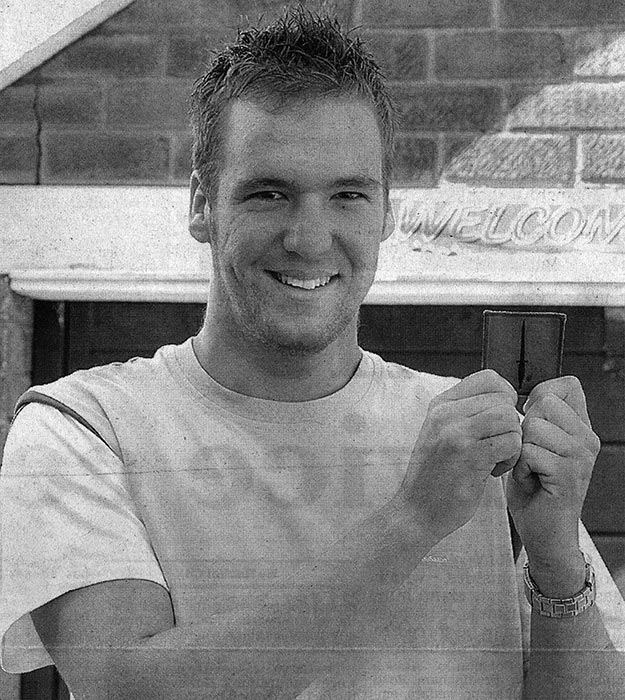
WHEN a Scunthorpe sapper came under enemy fire in Iraq, he and his two comrades sat in their
combat vehicle, not daring to move for 10 minutes.
But Andrew Melia (20) of 36 Engineer Regiment said he was still more afraid of being shot by American forces, because they were more “trigger happy”.
The bombardment came when he was helping clear an area of the al Faw peninsula of mines and helicopters covering them overhead had been spotted by the enemy.
The enemy had not even spotted Sapper Melia, who was the driver of the vehicle, and he and his crew came “into contact”.
Now back at his family home in Scunthorpe, Andrew said: “On the al Faw peninsula it was quite hairy. I came into contact three times. I was sat in my tank for 10 minutes. We daren’t move.
“We had two helicopters clearing our way and the Iraqis saw the helicopters and were firing at them. We went away and came back at night time. We had more chance of not being seen.”
Describing how he felt under fire he said: “All sorts went through my mind. I got a really nervous feeling in my stomach. It’s just an experience. isn’t it?
“When you join the army, as an engineer, it’s something that you expect to do. It was quite hairy.”
He added that they did a lot of their work during the night. His regiment was attached to the Queen’s Dragoon Guards and they were under overall command of 3 Commando Brigade.
His tank was hit by shrapnel when they were required to blow up a building full of explosives. “They said ‘Can you blow this building?’ Back at home you are supposed to be 1000m away and we were 250m away. The blast blew the tank back two metres and the shrapnel took out our rocket launcher.”
He said that they were surrounded in black smoke as they reversed away. He said: “We’d never do that again!”
When they examined the crater caused by the explosion it was 45 metres long by 15 metres deep. A lot of their work involved mine clearing and bridging.
After the last Gulf War, the military learned they needed engineering reconnaissance with the frontline troops and his regiment was the first to do that.
He said: “My main worry was the Americans. I was more scared of them than the Iraqis. They are more trigger happy, aren’t they?”
Andrew said he felt sorry for the Iraqi people. “Children were at the side of the road with their parents, asking for food and water,” he said.
Sapper Melia’s efforts were recognised by 3 Commando and he was presented with a battle honour by the Brigadier of 3 Commando.
He said this was a high honour for those who had not completed the marine’s course and he was hoping for promotion later in the year.

Hero’s welcome for Scunthorpe marine
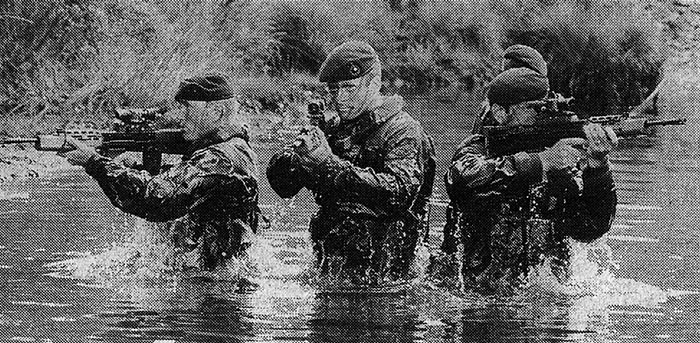
THERE was a hero’s welcome for one North Lincolnshire marine when he returned from serving in the recent conflict in Iraq.
Former Brumby Comprehensive pupil Sgt David Silvester, who now lives in Exmouth, returned with 40 Commando on Saturday.
He was at the vanguard of the operation to take Basra, and back in North Lincolnshire his parents caught a glimpse of him in action on the TV news.
When he arrived home he found it decorated with flags, streamers and yellow ribbons. But what he was really looking forward to was his favourite meal and a pint of beer.
Sgt Silvester was delighted with his homecoming. Speaking from Exeter he said: “It was a nice surprise. A nice chicken meal and a pint of Guinness went down lovely.”
He recalled the harsh conditions in Iraq saying: “Originally it was cold but then it got warmer.
“The people were happy to see us. One of the biggest concerns was that we were there to stay.”
The marines did meet resistance when they were going into Basra. Sgt Silvester said: “They were a fairly dedicated force, the militia and regular army.”
He added: “The experience gained from Northern Ireland came into play – street patrolling to put people’s minds at rest.”
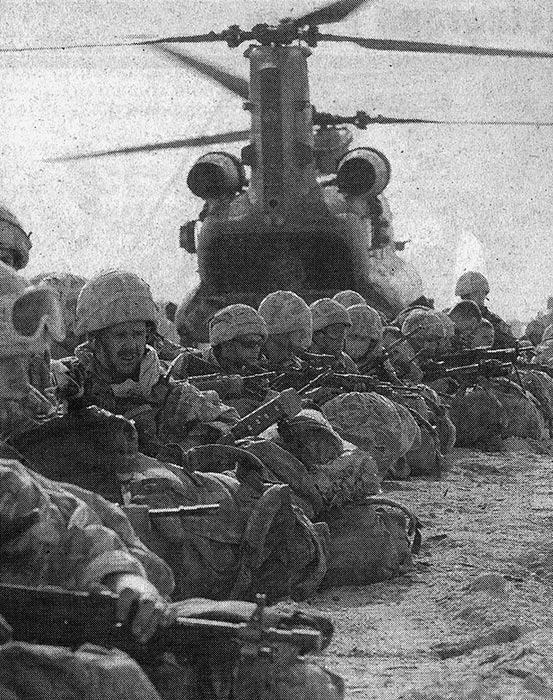
One tactic to win over the Iraqi people was known as ‘Psy Ops’ – or psychological operations.
He said: “We used Arabic notices to try and alleviate any concerns that the Iraqis might have. There was a little uncertainty initially. Then they were more pleased to see us.”
Sgt Silvester said the people themselves had prepared for the conflict and the hardship they would suffer, by stockpiling supplies.
He added the situation improved once they had restored the power and hospital facilities.
He said: “In the area we were patrolling, other forces were brought in to begin to get the country back on its feet.
Sgt Silvester thought he would get a couple of weeks leave, but nothing was decided. He hoped to be able to visit his family during that time.
40 commando flew into RAF Brize Norton in Oxfordshire at 6am on Saturday, after an eight hour flight from Kuwait. They then returned to their base at Norton Manor Camp, near Taunton, Somerset.
During the conflict the unit was instrumental in securing oil fields on the al Faw peninsula and also joined with 42 Commando in the battle for Basra.
Not one of 40 Commando was killed in Iraq, although there were 12 battle casualties, three of whom were seriously injured.
He was just glad to be back with his family, wife Tracey and their children Charlie (15) and Jack,
who is two-and-a-half.
Mother Doreen said: “It was lovely when we saw him on television. When they went Into Basra, we caught a glimpse.
“His wife’s been keeping in touch all the time to say that he was coming home. She has got the house decorated with Union Jack flags and yellow ribbons.
“We were down there last weekend we were hoping that he might have come back that weekend.”
From the Scunthorpe Telegraph on Tuesday, May 13, 2003.
 Ian Duncan Media