I far as I can remember this is probably the only time I have got the word diarrhoea into a headline. But you have to admit it makes you want to read on.
Army medic talks about life on front line
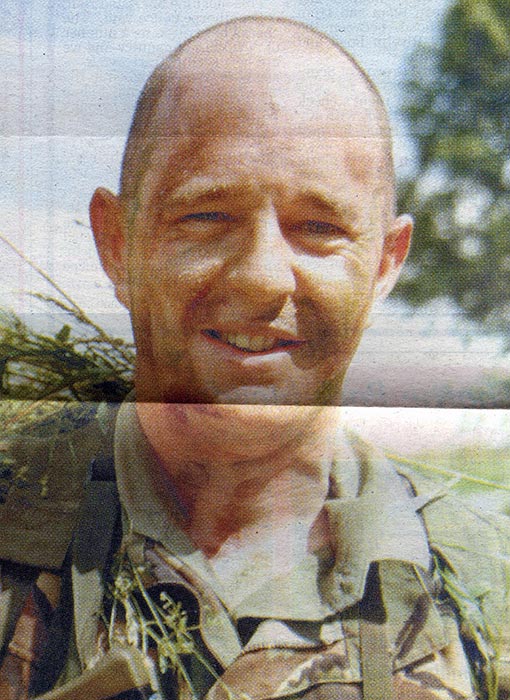
A NORTH Lincolnshire army medic has told how he came under mortar fire in Iraq while treating casualties of the war.
Capt Tim Lancaster, who serves full-time with the Territorial Army, was stationed near Iraq’s second city of Basra.
He believes the field hospital where he was stationed was the nearest British hospital to a frontline since the Crimean War in 1854.
Capt Lancaster, who joined other recruits from the East Midlands 212 Field Hospital, was surrounded by British artillery, and as a result often came under enemy fire.
He was given a compulsory call up. He said: “We were given 11 days’ notice. Then approximately 10 days pre-training.”
The field hospital was first deployed to Kuwait and later moved to Basra.
He said: “It’s the furthest forward field hospital since the Crimean War. When we were there, there was Incoming mortar fire.
“The area we were occupying was 25 square miles of pure British army might, and the Iraqis were firing one round after another into our position.”
He added once they came under fire the technology would locate the position and silence it. He said:
“The bangs were loud enough.
“At the time you were just hoping one wasn’t going to land near you.”
A lot of the mortar shells landed within a kilometre of their position. He said: “We were under cover when they were incoming. You were looking to see where they were landing.”
Capt Lancaster said they treated more enemy casualties than British. He said: “Obviously, being in the hospital, we had a vast number of Iraqi casualties, the British casualties didn’t arrive.
He added the vast majority of Iraqis didn’t want to be fighting.
He said: “We had trips into Basra, transferring patients, that was very cautious. There were paramilitary-type people taking pot shots at vehicles. That’s still ongoing.”
Capt Lancaster described the hospital like a scene from TV show M*A*S*H, but on a larger scale with the hospital having 200 beds. He said: “There were 650 people on our complex. A majority were TA and Royal Naval reservists.”
The main problem was diarrhoea and vomiting in the British forces due to the heat and lack of hygiene. He said: “It’s common in hot climates. The same thing happened last year in Oman. Quite stringent things go on to prevent this.”
But, he added this was difficult when there are a lot of flies, dirt and men eating in the field.
Capt Lancaster is now enjoying accumulated leave until the middle of June and is hoping to take a holiday somewhere without too much sand. He added he would probably choose the Caribbean.
He had to cancel a dream holiday to Vietnam and the Philippines when he was called up for duty in Iraq.
From the Scunthorpe Telegraph on Friday, May 23, 2003.
 Ian Duncan Media