The final article from Iraq which I feel shows the realities of war for the regular soldiers.
I had to interview three tank crew members about their experiences after returning from Iraq.
They spoke of comrades killed from friendly fire, a desperate Iraqi mother with a dying baby, having to kill the enemy and having to find out what was happening in Iraq from the BBC World Service.
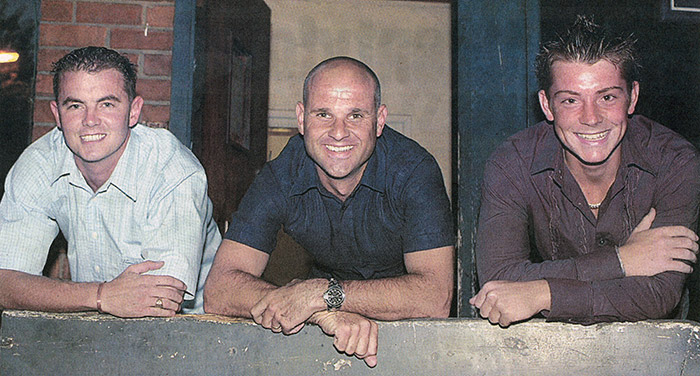
Three North Lines soldiers celebrate return from conflict

THREE North Lincolnshire soldiers – enjoying the company of their friends and family after returning from Iraq – have described some of the horrors they faced.
For one the harsh reality of war and the possibility of death was just a few yards away when a friendly fire incident killed two of his brothers in arms.
“I got out of my vehicle and cried. It was so upsetting.”
Tank commander Andrew Locking is filled with emotion as he remembers how two of his comrades were killed in the friendly fire incident.
They were serving with the Queen’s Royal Lancers, supporting infantry as they advanced on Basra early in the conflict.
The tank was hit by a depleted uranium shell from another Challenger 2 tank.
The tragic mistake happened in the dead of night when crews were relying on the latest in thermal imaging night-vision aids to spot their targets.
The Challenger 2 is the world’s most heavily protected battle vehicle but, stood little chance against the super-dense depleted uranium shells fired from the tank’s 120mm gun.
Andrew (32) said: “One of our tanks got hit by friendly fire. When daylight broke I saw the vehicle was destroyed.
“In a way it just brought it home to me, it was 200 metres away from where my vehicle was. It could have been me, but you just have to do the job, just carry on.”
Normally Andrew is based in Catterick, but he was back for a welcome home party at the Ferry Road Club with two other Scunthorpe comrades.
Lance Corooral Ben Leaning (21) is a tank gunner in B Squadron and recalled the time a desperate Iraqi mother handed him her dying baby.
He said: “The woman was clutching a half dead baby, she brought it to us. I picked it up, there was a faint pulse, but he died in my arms.”
Lance Corporal Leaning said rigor mortis set in almost instantaneously because the baby was so dehydrated and emaciated.
He said: “We had to give him back to his mother. She was crying her eyes out. It’s terrible. A week later we were handing out water left, right and centre.”
Their squadron was the first group of Allied tanks to cross the border from Kuwait into Iraq, and they had been told they would face the Republican Guard.
Lance Corporal Leaning said: “When you are actually killing them it’s very impersonal. Before I actually fired I thought there’s a probability I’m going to kill someone.
“I did it and I thought ‘so what’? You hit the target and it would spark. You fire, the tank recoils and it hits. You’ve got so much power at your fingertips.”
Corporal Ian Pearson (27) also served as a tank gunner with B Squadron and said most of the tanks had a short wave radio, on which they listened to the BBC World Service to find out news of the war.
He said they had felt cut off from the event surrounding them, sometimes just a few mlles away and relied on news broadcasts for information.
He added: “I think everyone back home knew more than us. We only got told what our orders were for the area.”
Cornoral Pearson found it strange to have to get the news of events a few miles away from the BBC in London adding it was quite ‘surreal’.
From the Scunthorpe Telegraph on Wednesday, August 27, 2003.
 Ian Duncan Media