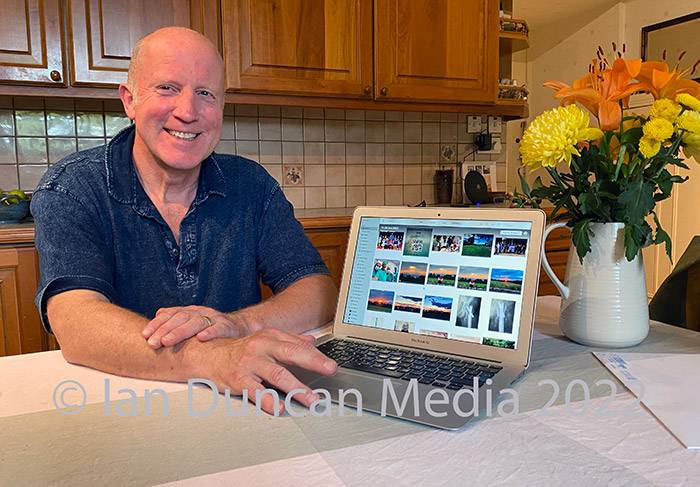
The latest report from Ukraine as Inverness surgeon Andy Kent returned to the Highlands after working with the medical charity UK-Med.
This is an extended report, as space was limited in the paper, with more information.
Additionally a second Inverness surgeon this week spoke about working with the charity on the BBC1 show The One Show.
An Inverness trauma and orthopaedic surgeon witnessed first hand two Russian rocket attacks at both ends of the same train journey.
Andy Kent, who is based at Raigmore Hospital, flew to Ukraine on his 58th birthday to work with the charity UK-Med for the second time since the war began.
The team was travelling to Dnipro and the journey took almost a day.
Mr Kent said that the Russians were targeting railway lines and the first incident was on May 3.
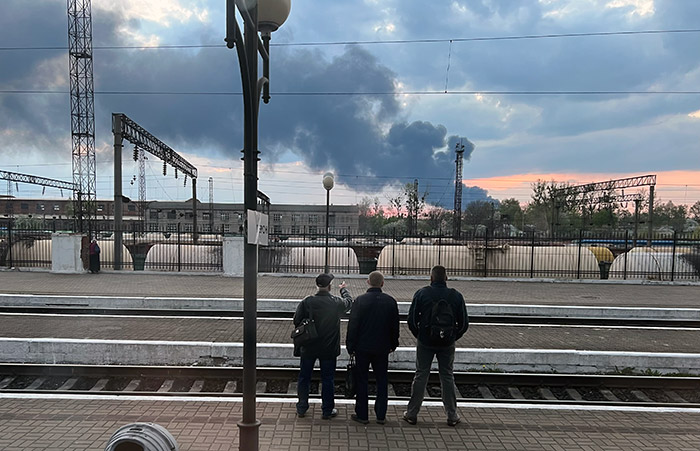
He said they took the overnight train from Lviv, adding: “Just as we got on the train, late in the evening, there were a couple of missile strikes at the station. There were two missiles that landed right near the station.
“We were advised to stay on the train. We travelled overnight and it took us nearly 24 hours to get from Lviv to Dnipro and, just after we arrived there was another big missile strike so it was both ends of our journey. I was thinking ‘maybe I should use a different phone’.”
Mr Kent said the rail lines were being targeted because trains were being used to transport weapons and arms. He said: “They were trying to prevent weapons from getting across.”
“Over the years I’ve been in lots of similar situations and we knew that most of the missile strikes were targeted, they were quite accurately targeted, so you would be pretty unlucky unless you were in the wrong place at the wrong time.”
He said the hospitals were also being targeted by the Russians. He added: “I have to be careful that we don’t give away the site but there was a hospital that was attacked, near Sumy, 30km from the Russian border.
“Sumy was taken over and this hospital was targeted – that hospital was then non-functional, certainly the operating theatres, so UK-Med set up a surgical unit.
“The actual infrastructure was donated by the UK government to UK-Med and then we got it set up.
“This area had been taken over by the Russians during the conflict and they just fired shells into the hospital.”
During his time there, he treated a variety of injuries – mainly people who had lost limbs or suffered shrapnel injuries.
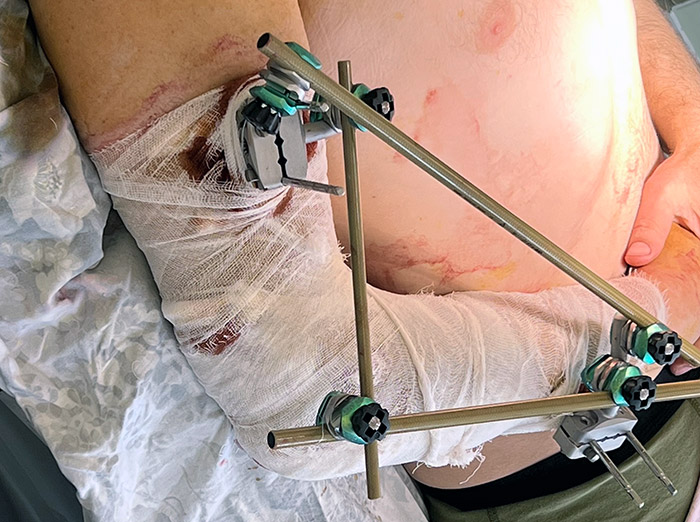
He said: “We were operating, putting these fixator frames on this soldier who was shot through the elbow with an AK47.
“So we had done all the soft tissue stuff and fixed his elbow as best we could with what we had and then put this frame on to keep everything solid.
“These were frames that we brought out because they didn’t have access to them.”
Mr Kent said he felt the war had escalated since his first visit and added: “I think it has got considerably worse with the numbers of casualties.”
He said that the hospital would regularly see 100 military casualties come in overnight and were moved at night because it is safer.
As well as his surgical role Mr Kent also helped provide training – including a limb reconstruction course and training firefighters – and also provided kit and supplies.
He said: “One thing the Ukrainian doctors had asked for was plastic surgery and limb reconstruction surgery for all the injuries.
“What we were seeing when we got back the second time was the type of injuries had gone from being quite a lot of civilian casualties, quite a lot of gunshot wounds, to mainly military casualties and mainly blast type injuries.
“By the time we had left it was nearly all blast injuries.”
As well as Mr Kent two other surgeons, an A&E doctor and an anaesthetist have all travelled from Raigmore hospital to Ukraine to work with UK-Med.
From The Inverness Courier on Friday, July 22, 2022.
Related article: City surgeon sees a change in war zone
Related article: Surgeon back on the Ukrainian frontline
Related article: Inverness surgeon returns to warzone
Medic tells of life in Ukraine
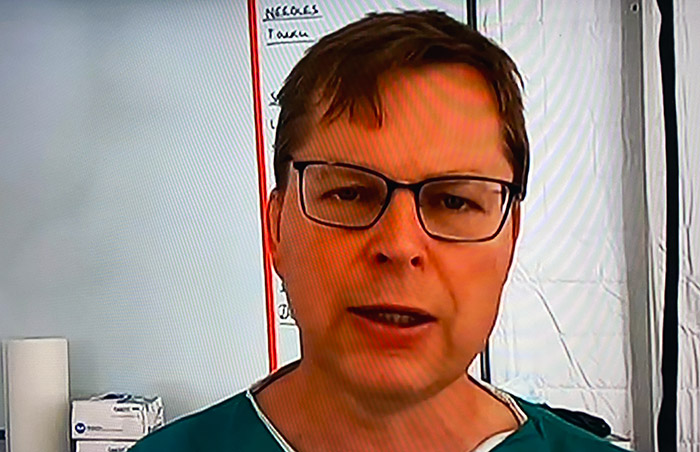
Another Inverness surgeon has spoken about his time in Ukraine working with medical charity UK-Med.
Professor Angus Watson, a colorectal surgeon based at Raigmore Hospital, was featured in Tuesday’s edition of the One Show on BBC1.
The short film showed him and another medical professional travelling to eastern Ukraine to work at a “pop-up” field hospital which replaced an existing facility which had been damaged by tank shells.
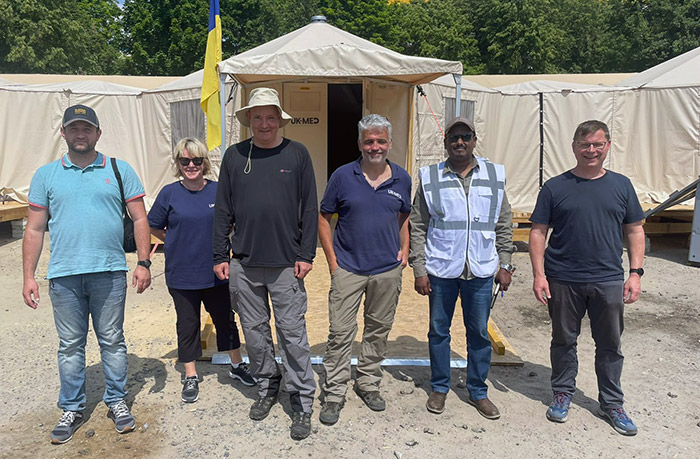
Speaking before setting off, he said: “Everyone is aware of the humanitarian crisis that is there. There is a sense of humanity that I feel, there is a population in need.”
He travelled from Inverness by train to Manchester Airport before heading out to an area which had been briefly occupied by Russian forces with an ever-present risk of attack – a siren went off during filming.
Prof Watson said he was shocked at the damage to the existing hospital, adding: “Tank shells have gone through several areas of two or three floors – you can see the holes in the wall and an area where a shell went through a metal cabinet.”
The relentless shelling of the hospital meant patients had to be moved to safety.
The field hospital was built in just 12 days and was staffed by medical teams from both the UK and Ukraine.
Facilities included an operating theatre, recovery area, 20-bed ward and A&E.
One of his first operations was a gall bladder operation on a local resident and he also operated on a soldier’s bullet wound in the lower leg.
He said: “It’s been an enormous privilege to be working with UK-Med in Ukraine and I am confident that we have made a long lasting difference to the lives of the patients and people.”
From The Inverness Courier on Friday, July 22, 2022.
 Ian Duncan Media
3 thoughts on “Life on the front line for surgeon ”