
This year marks the 90th anniversary of Armistice Day.
The 11th hour of the 11th day of the 11th month is universally associated with the remembrance of those who died in the First World War, but those who died in all conflicts from then onwards are commemorated.
The date marks the moment when hostilities ceased on the Western Front in 1918, with the signing of the Armistice.
Many Scarborough men fought in The Great War, and this week the Evening News dedicates a special tribute to all those local men who risked or sacrificed their lives for the liberation of the country.
Today, Ian Duncan meets a woman whose father and five uncles served in the First World War.
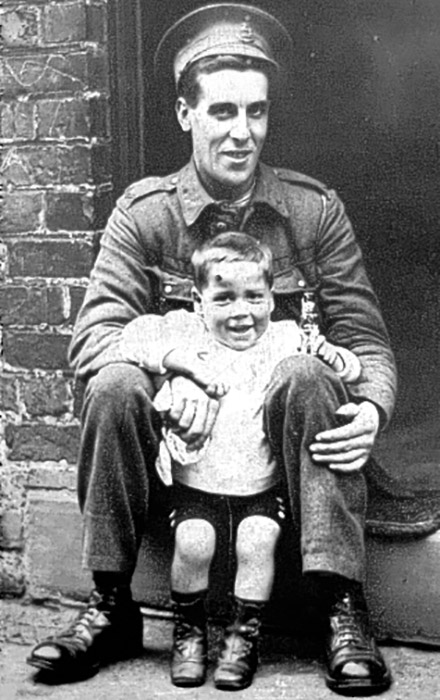
REMEMBRANCE Sunday has more significance for 91-year-old Elizabeth Goodrick than most because she is reminded that her father and five of her uncles went to serve their country during the First World War – and one of them did not return.
Scarborough’s very own band of brothers consisted of her father, Alfred, who served with the King’s (Liverpool) Regiment, and his brothers Thomas, Richard, Albert, Harold and Herbert, who served with several different regiments.
Miss Goodrick said it was Herbert, the youngest of the six, who was killed in action while he was serving with the 16th Leicestershire Regiment.

She said: “My father was born in 1886 and he ran away and joined the army as a youth. He came out of the army when he was about 20 years old.”
Even though her father had left the army he was still on the reserve list and as soon as war was declared in August 1914 he was called up as a Private.
Miss Goodrick said her father was one of the first soldiers to be injured at the Battle of Mons, on Sunday, August 23, 1914, after a gun carriage ran over his foot and he was sent home to Scarborough to recuperate.
And she still has a copy of the front page of the Scarborough Pictorial, dated Wednesday, September 23, 1914, which shows him recovering in his hometown.
She said: “He was the first Scarborough man to be sent back home wounded. He was visited by Lady Irene Dennison who gave him hankies and cigarettes. He got better and went back to the front and got shot through the arm.”
Miss Goodrick, who has lived in Ireton Street all her life, said he showed her the resulting scar several times when she was younger – which she remembered vividly. She said: “There’s Irish blood from his mother.
“He used to tell stories about what they’d done but he didn’t mention what it was really like.”
She added that as well as the six brothers, two of her aunts served as nurses during the war, and her father was from a very large family – he was one of 21 siblings and many of them were too young to volunteer.
Her father was a postman in Scarborough during peacetime and died in 1946 when he was 59.
He was awarded with the Mons Star, the Great War For Civilization medal and the Victory Medal for his service during the conflict and was posthumously awarded the Imperial Service Medal for his service with the Post Office.

She praised her mother, Rosina, who managed to bring up the family while her father was away. She said: “She moved house with four children in the middle of the war. They had guts the women then.”
Town link with dramatic First World War image
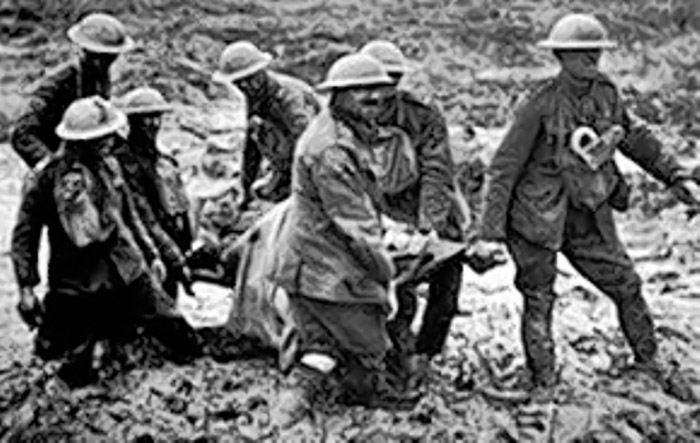
A SOLDIER in this picture had close local connections, later becoming a prominent businessman, councillor and mayor of Scarborough.
He was Charles Arthur Marriner, and was the long-ago ex-boss of the Scarborough reader who sent in the information (who wishes to remain anonymous).
Charles ran a Trafalgar Road garage and haulage company and used to confirm to some of his drivers (who had themselves fought in World War Two) that it was indeed him on the photograph.
The reader recalls: “He was quite matter of fact about his experiences; the only comment about the war I remember him making to me was: ‘Do you know where I was thirty years ago today lad? I was running like hell from the Jerries!’ This referring to the last-gasp German offensive of 1918.”
Thanks to the fine grain of the plate-glass film in use at the time a number of large and very clear versions of this famous photograph are in existence, from which Mr Marriner can be readily recognised.
It has been used to illustrate a number of books and is on the front and rear cover of the history book In Flanders Fields, by Leon Wolff (Pan Books, number X106).
Mr Marriner and his wife Mrs Doris Marriner lived in a house called Bramham (after the village of that name near Leeds) in Givendale Road.
Their only child was a daughter called Joyce who, thinks the reader, died in her teens. “The family came to Scarborough from the Leeds area and nephew Don who used to come and stay for the cricket festival. He will now be in his mid-seventies.
“Mrs Marriner died before fulfilling her dearest ambition of becoming mayoress. Mr Marriner remarried to a lady who was herself either a councillor or in some way connected to the council. He himself died in, I believe, the early 1960s.”
The reader finishes: “As an ex-soldier myself (but of rather more recent vintage!) who, as a small boy, lost several close relatives in World War Two, I find your articles interesting but very poignant.”
Tragic final days
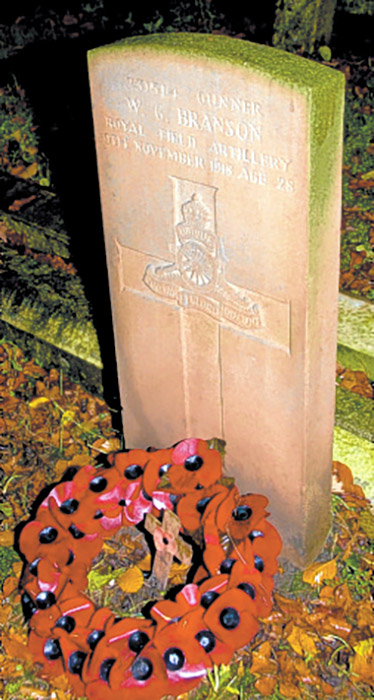
FOLLOWING a recent trip by Evening News reporter John Ritchie to the First World War cemeteries of northern France, one reader, George Westwood, spotted this grave in Manor Road Cemetery.
Mr Westwood said: “This unfortunate soldier was one of the very last to be killed in action during the last days of the Great War. Gunner WG Branson, of the Royal Field Artillery, died on November 9 1918, aged 28, just hours before the ceasefire.”
Brave Pal gets Military Medal
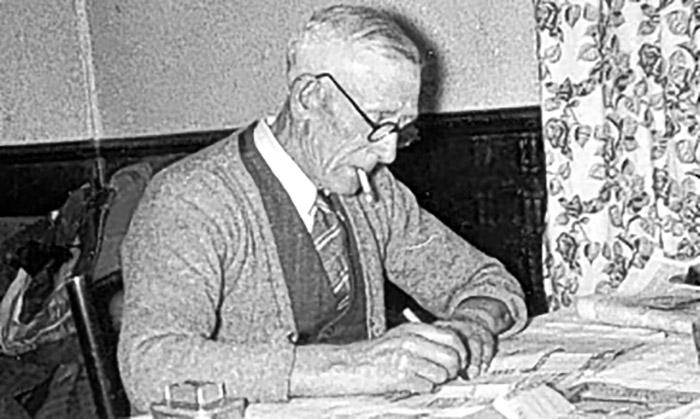
THIS was my stepfather Harry Sellers who won the Military Medal in the Great War for saving the life of Sidney Foord, who was later a member of Scarborough Council.
I think Harry was in the Scarborough Pals. I don’t have any further information on the award but thought it worth a mention.
Mrs Jean Wallington Harley Close, Scarborough.
From the Scarborough Evening News Saturday, November 8, 2008.
 Ian Duncan Media