
An unassuming rock which hides a grisly past in the aftermath of the Battle of Culloden

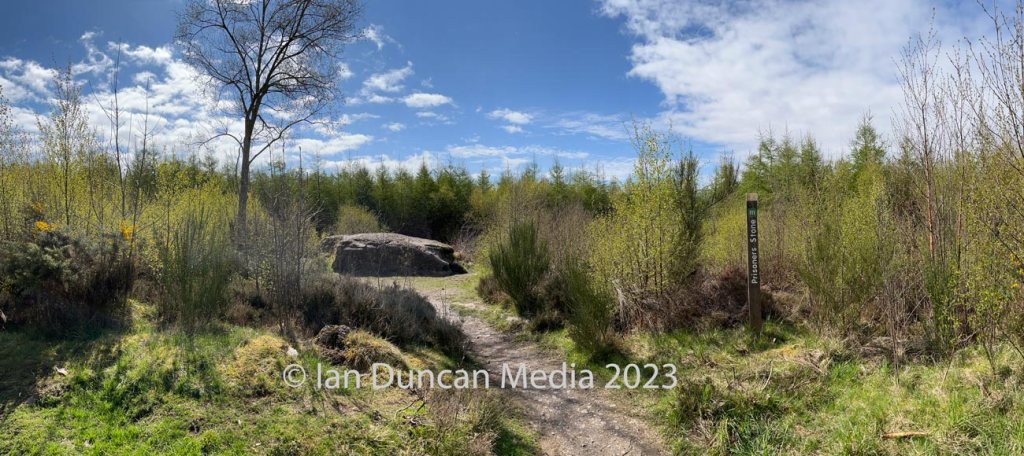
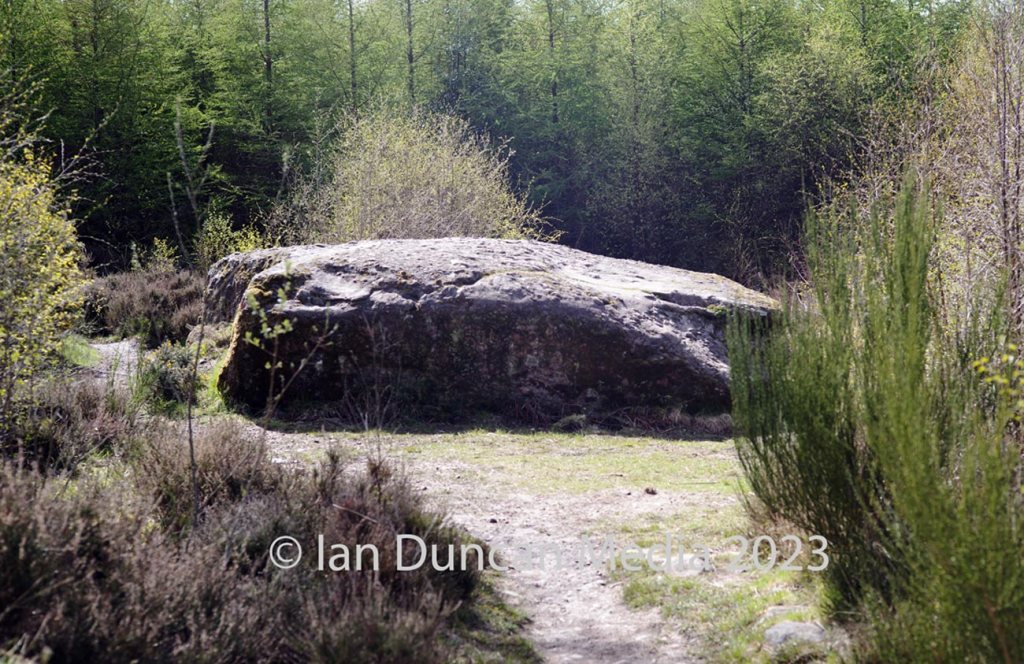
After a friend shared some photos of of this Highland landmark through social media yesterday I decided it was time that I paid it a visit.
My Inverness flat is just a few miles from Culloden Battlefield and, when I first moved to the Highlands four years ago, it was the first place I visited because I have an interest in military history and the Jacobite cause.
The battle itself took place on on April 16, 1746 on Culloden Moor and marked the end of the Jacobite Rising. It saw the Jacobite forces of Prince Charles Edward Stuart, who was hoping to reclaim the throne for his family, facing a British army led by the Duke of Cumberland, who was the son of the Hanoverian King George II.
The actual fighting had lasted less than an hour and the Highlanders were defeated – they routed from the battlefield and were pursued by the British forces all the way to Inverness.
The brutality of the British soldiers is well documented – Jacobite casualties are estimated at between 1,500 and 2,000 dead or injured and many of them happened during the pursuit following the battle.
Cumberland issued an order reminding his men that the Jacobites had orders to give the British troops “no quarter”, however it is believed that the evidence for this was based on a poorly forged unsigned document, and in the days that followed the battle many of the wounded were put to death.
It is no surprise that, while Cumberland was initially fêted for his victory, when public mood turned against him and he earned the nickname The Butcher due to the excesses of his troops.
The British forces also harried the Highlands, burning homes and driving off cattle, and the Government was determined to destroy the Highland way of life
Not far from the battlefield is a place called Culloden Wood which today has a rather pleasant forest trail covering a distance of about two miles.
As you follow the trail you pass by what is known locally as the Prisoners’ Stone which is a large boulder which local belief has it that it is the place where 17 Jacobites, who had been captured following the battle and held in the cellars of nearby Culloden House for a few days, were executed.
Apparently there was one survivor who was able to crawl away to tell the tale of what had happened. And there is an almost contemporary account, by Robert Forbes in 1749, which tells of John Alexander Fraser who was an officer of the Master of Lovats regiment.
He had been wounded at the battle after he was shot through the knee and, together with 17 wounded officers, was left untreated by doctors or surgeons for three days. They were then bound with ropes and loaded onto carts and carried a little distance from the house before being shot from just two yards of which “most of them all expired in an instant”.
Apparently any Jacobite prisoner who showed any signs of life was clubbed to the head by their executioners with a musket butt to finish the job and Fraser suffered a broken nose and cheek-bone, as well as an eye injury, before being left for dead.
However, a certain young nobleman who was riding out by the house of Culloden and park dike saw some signs of life in Fraser who he carried away saving him – however his wounds were profoundly life changing.
Given the well documented way the British forces behaved towards the Highlanders I could believe such events happened at the Prisoners’ Stone and Culloden Wood is well worth a visit.
 Ian Duncan Media
Enlightening and informative
LikeLike
Thanks for the feedback…
LikeLiked by 1 person
Was there today – beautiful walk up to the stone but no information so came home and googled it – reading your article was very informative – thank you.
LikeLike
Thanks for the feedback and it is appreciated. Glad you found the article informative and, if I am being honest, a lot of the information came from Google. I am now living in Carlisle so expect future posts to be more Cumbrian-focussed…
LikeLike